Archive

Archive for the ‘Anti Aging’ Category

Add Years to your Life – Reduce Stress at the Spa

April 17th, 2009

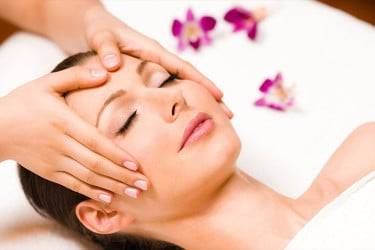
facial-stress-relief

Spas Add Years to Your Life

Did you know that April 16th was National Stress Awareness Day? Coincidence that it falls the day after taxes are due? I don’t know, but spas can help. ISPA’s research shows that the No. 1 reason people go to the spa is to relax and relieve or reduce stress. Here are some other facts on stress:

* 1/3 of Americans are living with extreme stress and nearly half believe their stress has increased over the past five years. (American Psychological Association)
* People who go for a single deep-tissue massage reduce their blood pressure by seven points. Over time, lowered blood pressure can add six years to your life. (Journal of Alternative and Complementary Medicine)
* By 2020, the top five diseases will all have the underlying contributing factor of stress. (World Health Organization)

Dealing with your stress today can help prevent stress-related illnesses (heart disease, stroke, depression) tomorrow. “There’s quite a bit you can learn at a spa to help reduce stress,” said Dr. Brent Bauer, director of the Complementary and Integrative Medicine Program at Mayo Clinic. “Things like meditation, acupuncture, massage and guided imagery – the right answer is to find what fits for you and incorporate it on a regular basis.”

“Spas are not about luxury, they’re about teaching healthy living; they’re a place where people can get tangible results and work on overall well-being,” said ISPA President Lynne McNees. “So many spas are offering great ways to help you manage your stress that it’s easy to find a spa experience that fits into your budget.”

A sampling of the stress relieving treatments offered by ISPA members during April include:

Saybrook Point Inn & Spa’s Calming Combo includes your choice of any 50-minute massage with a scalp treatment or foot massage. $99 Mon-Fri (CT)


Skinsational Skin & Body Spa*  offers free mini-massage or mini-facials from 11a.m. – 1 p.m. Mon-Thu (CA)


Relache Spa has a De-Stress for Less package with a massage, facial or manicure/pedicure combo. $99 (TN)


Le Boe European Day Spa’s Tax Stress Relief Package includes 60-minute aromatherapy massage, 15-minute face and scalp massage and 15-minute reflexology. $130 (FL)


The Founders Inn & Spa’s Stress Less is a 50-minute massage and 50-minute pedicure. $99 Mon-Thu (VA)


For a complete list of ISPA members offering stress relieving treatments please contact ISPA, and visit www.experienceispa.com to find an ISPA member.

About ISPA

ISPA is recognized worldwide as the leading professional organization and voice of the spa industry. www.experienceispa.com

Anti Aging, Boost Immune Sysytem, Health, Health Tips, Spa, Stress Management Spas , ,

Facials a prescription for your face – pampering

March 20th, 2009

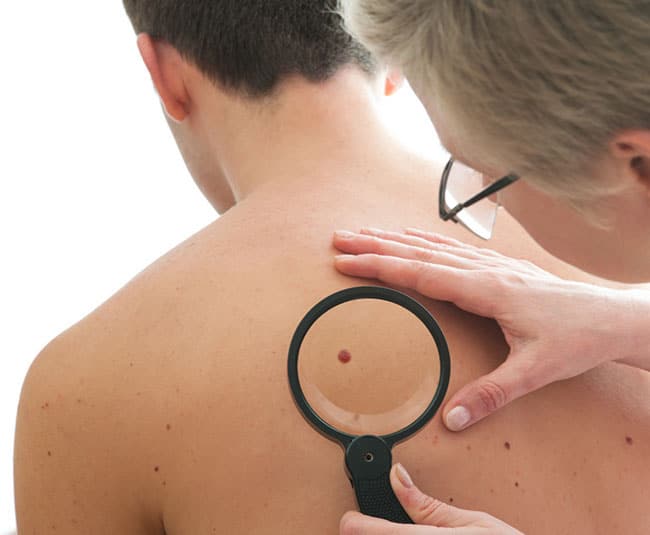
male-facial.jpg

For years, Michelle Palmer, a lawyer in Manhattan, bounced from aesthetician to aesthetician having her skin cleaned, assessed and exfoliated, simply because she had always heard that facials were the best way to get glowing skin.

“I never did a ton of research to figure out what those products were doing, or whether or not I could get results at home, or whether I was better off going to see a dermatologist — this is what single women in the city did,” said Ms. Palmer, 36, who paid anywhere from $100 to $250 per session.

Aestheticians and spas have long promoted such routine facials as required maintenance for radiant skin. But dermatologists don’t necessarily agree. Today’s bloated and breathless spa menus promise more than a mere facial can deliver, dermatologists say, and have people thinking that monthly facials can be their first line of defense against wrinkles.

“People will say, ‘I’ve had facial after facial and I still have wrinkles,’ ” said Dr. Amy Derick, a board-certified dermatologist from Barrington, Ill. “They have unrealistic expectations of what facials can do.”

Meanwhile, aestheticians say that some doctors downplay how effective their treatments are because they don’t want their patients consulting the facialist down the street. “They’re bad-mouthing us because they want our business to go to them,” said Wendei Spale, an aesthetician of 14 years and the owner of Peace of Mind Skin & Body Care in the Studio City neighborhood of Los Angeles. “If my clients go to them, they’re going to talk them into fillers, Botox or a super strong peel they don’t need.”

Facials, a pillar of the $10.9-billion spa industry, are the third most popular service at spas nationwide, after massages and nail care, according to the International Spa Association.

Some facials are marketed as massages for the face, relaxation pure and simple. But most spas and aestheticians also offer a dizzying array of results-oriented facials that claim to do far more.

Aestheticians say that so-called oxygen facials can plump skin, produce collagen and regenerate new cells. A company called Intraceuticals has its technology in 300 spas, resorts and doctors’ offices nationwide. It uses pressurized oxygen to deliver modified hyaluronic acid to the face, but doesn’t have any research to back its machine, said Deirdre Burke, the director of sales and education. Still, the company believes in its efficacy, she said, adding, “If you have had a treatment, you’re a believer.”

But without scientific evidence, many dermatologists remain unconvinced. “Show me the data that oxygen facials make the skin better,” said Dr. Jeffrey Dover, a director of SkinCare Physicians, a comprehensive dermatology practice in Chestnut Hill, Mass.

Exhale spa, with outposts in Dallas and in Santa Monica, Calif., promotes a $195 “non-surgical face lift” on their Web site that entails using “sub-sensory microcurrent waves to tone and lift facial muscles.” And the Manhattan flagship store of Dr. Nicholas Perricone, a board-certified dermatologist, offers an electro-stim lifting facial, which his site says is a “non-invasive ‘face lift’ ” that will “stimulate facial muscles to perform more youthfully….”

Dr. Derick, who isn’t familiar with these two particular facials, suggests that massaging of the skin alone can cause temporary swelling, which may be responsible for that lifting effect after a facial.

What then can consumers expect from deep cleansing, microdermabrasion and other staples of today’s facials?

To rid oneself of some of the outermost dead-cell layers, old-fashioned exfoliation, microdermabrasion or a glycolic peel will do the trick, many dermatologists say. A salicylic peel may help diminish sun spots, they say, and acne sufferers may benefit from a meticulous extraction of clogged pores.

More and more dermatologists are hiring aestheticians to perform such services. Ms. Palmer, now married, found her facialist of three years, Rowena Woo, at her dermatologist’s office, Tribeca Skin Center in Manhattan. “If client wants an ‘anti-aging’ facial, we don’t have that,” said Ms. Woo, who sticks to basics like cleaning, extraction and exfoliation.

Dr. Arielle Kauvar, the director of New York Laser & Skin Care in Manhattan, doesn’t offer facials per se, but she does offer microdermabrasion as well as glycolic and salicylic peels. “From a pure budgetary standpoint, facials can add up,” she said. She’ll advise patients who dislike their frown lines or crow’s-feet and spend hundreds of dollars on anti-aging facials to consider Botox. “The same amount of money would at least erase those wrinkles,” she said. (Temporarily, of course.)

Dr. Leslie Baumann, a dermatology professor at University of Miami, ignited a firestorm recently when she wrote on her Skin Guru blog for Yahoo that facials are a waste of money. Outraged aestheticians and their followers made up a lot of the 1,453 commenters. Two criticisms were particularly sharp: that aestheticians “often don’t know which products are right for the skin of each client” and that facials cause breakouts most of the time.

Dr. Baumann has since said that aestheticians play a vital role advising clientele about home care and the wearing of sunscreen. However, she is astonished that some of her new patients “throw facials in at the level of sunscreen.”

Dr. Baumann said: “Getting a facial is a great cost to cut,” because, unlike sunscreen, “it’s not doing anything preventative or anything long term for your skin.”

Some aestheticians and their satisfied clients wouldn’t agree. Nancy Girten, a 50-year-old geologist from Los Angeles, used to have sun spots on her face, but since she started getting lactic acid peels 12 years ago from Ms. Spale, she is convinced that her skin tone has evened out significantly.

Dermatologists are also wary of facials that aren’t customized. “If you drop into a hotel, they do a similar thing to everybody,” said Dr. Dover, who has had aestheticians on staff since 2000, and is the co-author of “The Youth Equation.” “It’s a recipe.”

Such one-fits-all recipes where the aesthetician may not even do an initial skin assessment can backfire. Take the case of Dr. Dover’s wife, who is also a dermatologist. “She’s gone for spa facials where they put things on her skin that should never be put on,” he said. “Then they do a massage, and she breaks out in deep tender pimples.” Now she gives to others any gift certificate she receives for a facial. “The standard in the industry has to include a complete analysis of the skin,” said An G. Hinds, the president of Catherine Hinds Institute of Esthetics in Woburn, Mass. “Every aesthetician should know this.”

But often the consumer is the one to guess which facial might work. Dermatology Partners, a practice with three aestheticians in Wellesley, Mass., circumvents this by only booking the hour, not the service, said Milena Turok, the director of aesthetics. “We analyze,” she said. “It’s dangerous for a patient to pick a treatment.”

Demand customization, advised Celeste Hilling, the founder of Skin Authority, a product line used at 62 resorts and 37 doctors’ offices nationwide. “At the end of the day whether you’re spending $40 or $400,” she said, “if that facial doesn’t have active ingredients for what you want, it’s not worth it.”

Full Article and Credits

Anti Aging, Beauty Tips, California Day Spa, California Spa, Day Spa, Face Lift, Facials, NY Spas, NYC Spa, Skin Care , , , , ,

Facials Critical for Good First Impression

March 12th, 2009

Our face is the very first impression we make, and in a world of first
impressions, we all want to make the best one we can.

And since your skin also plays the vital role of protecting you from the environment, we should return the favor and give it some help from time to time.

If constant stimulation has started to take its toll on your physical appearance, you’re not alone.

The morning after a long night out our skin looks a little heavier, tired and in need of some help – much like the rest of your body does. However, your face showcases your troubles a lot quicker than the rest of your body. When a face looks attractive, healthy and fresh, we feel attractive, healthy and fresh from within.

First things first: You need to know what you’re protecting before you start fixing, so you don’t do more harm than good. There are three layers of skin. You only need to worry about the first two. The outer layer, or epidermis, is the protective, waterproof wrap your body uses as a natural barrier to keep out anything that may be harmful to the body, including UV sunlight, chemicals and pathogens.

Jenny Weisenborn, of the United States, applies moisturizer to her face to deal with the harsh winter air. She has been in Korea for a year and a half. 

However, it holds no blood vessels. In fact, the important stuff lies in the dermis, the layer below the epidermis. This layer holds all the blood vessels, hair follicles, sweat glands and sebaceous (oil) glands of the skin. In addition, this is where we find all the collagenous and elastic fibers. This material keeps our skin tight and taut, which we try so desperately to keep strong and fit throughout our lives.

The second thing you need to educate yourself about is the environment your skin is exposed to on a daily basis. For instance, here in Seoul during most of the year it’s nice and humid, which helps keep water on the skin and thus keeps it hydrated.

However, in these harsh months of the year, the air is dry and windy, which is like a double whammy. Your skin has enough of a fight with the dry, cold air but with the added bonus of fierce winds, without proper protection, you and your skin will suffer.

Related Articles:


Another reality check: No matter how dry our face may be, our natural oils still pick up toxins in the air. As we all know, Seoul is not known for its pristine air quality and skin soaks the toxins up like a sponge. Let’s imagine that in a perfect universe, we all live healthy lifestyles full of exercise and great diets. Our skin still has to fight elements not under our control.

There is hope, though, for alleviating some of these challenging environments.

Moisturizers and cleansing are the foundations of healthy skin. Some of our regular vices like caffeine, cigarettes and alcohol dehydrate skin the quickest. Cutting these vices out completely would improve your skin tremendously but so would a million dollars and a personal staff of 20, all of which are highly unlikely to happen. These days, good cleansers are a bit pricey but very important to have. Thankfully, skin care is a lot like fashion today pairing a less expensive item with a more expensive classic creates the perfect combination. Today’s lower-priced cleansers and moisturizers include Keihl’s and Clinique products which range from 20,000 won to 45,000 won. For the more expensive, more advanced treatments try Este Lauder, Bobbi Brown or SK II for 50,000 won to 150,000 won. If you would like to invest in your skin care, Chanel and la prairie are upward of 200,000 won but you get everything you pay for in radiant and vibrant skin. All of these products are readily available at your local department stores.

It goes without saying that your diet is an intricate part in the way your skin reacts and looks. You need one or two servings of fruit and vegetables each day. Fruits and vegetables are not only great for vitamins and antioxidants for the skin but they also provide us with water that stays in our body longer than when we just drink it. Water is also a must. Drinking water will provide us with well hydrated skin. However, according to Dr. Murad, a clinical dermatologist based in London, once water comes to the surface you have to keep it there. It often rapidly escapes through sweat or dry air. Drinking water alone will not keep your skin hydrated. Moisturizers maintain the hydration and are completely necessary. The one thing that makes water a crucial element in healthy skin is the expulsion of toxins from our bodies via the excretory system. Without adequate amounts of water, toxins get stuck in our bodies and can build up, eventually escaping from the pores.

For the average person 1-2 liters a day will suffice in keeping the toxins from building up; however there are always exceptions. Take out and processed foods hold a high amount of sodium that holds water in the body, so add another glass to the equation when you eat either of these.

Unfortunately, not all toxins can escape from the body through water; some attach to us from the air. When we combine this with oils and billions of dead skin cells that try to shed everyday, our face can start to look more like a microscopic junkyard than a healthy surface. For this reason, exfoliation is key. Exfoliation is the process of shedding the outermost surface of the skin containing dead skin cells and toxins to reveal the newer skin beneath. This process unclogs pores, keeps skin clean and helps prevent acne. It should always be done after cleaning your face with warm water, allowing pores to be as open as possible. Men can particularly benefit from exfoliation as it exposes hair follicles, allowing for a better shave.

Facials are often referred to as an indulgence; but for healthy looking skin they should be a requirement. Home facial care still pales in comparison with some of the artillery your local spa has to help refresh your skin. Spas use oxygenated steam, which not only opens up the pores but it’s a huge wake up call to the cells in your face. Our cells, like most of our body, can get tired and a little run down from day to day activity. With bursts of oxygen and a facial massage our cells start moving at a rapid pace and circulation is at its peak. This quickly reduces under-eye circles and stress lines, while increasing blood flow. Spas also offer many different treatments that cater to your own special problems, such as dryness, oily skin, sensitive skin, acne prone skin. Spa facials generally run from about 50,000 won to 150,000 won depending on the service. Most dermatologists suggest once a month or every two months for those of us with active lifestyles.

There is also the matter of “When in Rome.” Expats and Koreans alike can benefit from local jjimjilbangs, or bath houses. It’s my belief that Jjimjilbangs can single-handedly be the greatest tip the Western world can learn from Korea. Most Koreans use the jjimjilbangs to rest and refresh their minds and bodies. Jjimjilbangs are large spas that have access to just about every good thing your skin needs to renew itself. These spas are equipped with saunas, massage chairs, a masseuse with exfoliation gloves and large baths infused with herbs like lavender and ginseng.

This is a one-stop shop for looking and feeling better, especially during these grueling winter months. The greatest part is that entry generally about 9,000 won. Massage chairs are about 1,000 won and the masseuse is around 10,000 won.

Our face is the very first impression we make, and in a world of first impressions, we all want to make the best one we can. And since your skin also plays the vital role of protecting you from the environment we should return the favor and give it some help from time to time.

Full Article and Credit

Anti Aging, Day Spa, Facials

Reverse the Signs of Aging

February 19th, 2009
botox-injection

Botox Injection example

For years, Sue Hazen watched as the effects of time and a long-term smoking habit took their toll on her 53-year-old face.

At the end of January, the Port Jefferson Station resident decided to investigate some alternatives for turning back the clock. She and her husband, Peter, attended a seminar given by renowned Manhattan cosmetic plastic surgeon Stephen T. Greenberg held earlier this month.

Dr. Greenberg, who was speaking at the Spa at East Wind in Wading River, is frequently interviewed and asked to discuss his knowledge of the latest cosmetic surgery techniques. 

At the end of Dr. Greenberg’s 60-minute informal lecture, Ms. Hazen, who quit a year ago after smoking for a decade, decided to take the first step in recapturing her youth. She underwent a serious of injections, which were administered by Dr. Greenberg, to hide lines and wrinkles on her face.

“I guess I’m just not doing well with getting older,” said Ms. Hazen, who received Botox injections to temporarily paralyze muscles in her forehead, and Restylane to hide the wrinkles around her mouth and cheeks.

“The injections pinched a little bit,” Ms. Hazen admitted, while holding an ice pack on her slightly swollen face immediately following the procedure. “As for how it comes out, I’ll have to let you know.”

During his lecture, Dr. Greenberg explained various options, from facial creams to invasive surgery, to help turn back the clock. The surgeon, who has also appeared in national magazines such as Harper’s Bazaar, Cosmopolitan, More, and Elle, gave a “head to toe” analysis of the latest alternatives now available.

Starting with the face, Dr. Greenberg explained that wrinkles and sagging—commonly known as jowls—and/or loose or thin skin near the neck are some of the most detested effects of aging. He explained that as we grow older, our skin becomes thinner and less radiant with loss of elastic tissue and fat cells known as collagen.

“The effect of gravity causes skin and tissue to sag downwards from the face, toward the chin, lower face and surrounding neck,” Dr. Greenberg said. “People come to me and say ‘I can’t believe I have jowls,’ but we all age the same way … The fat that once was in our cheeks has drifted down your face into your jawline.”

Other contributing factors that can contribute to wrinkles include reduction of muscle mass, sun exposure, smoking, genetics and even diet, he explained. Dr. Greenberg noted that until recently, invasive plastic surgery was the only effective method to hide jowls and facial wrinkles.

But new injection gels, known as Restylane and Perlane, are providing some non-surgical relief, too. Restylane and Perlane are trade names for a specific formulation of non-animal sourced fat replacement gel, known as hyaluronic acid, which is most commonly used for lip augmentation.

At Dr. Greenberg’s lecture, Lisa Paveglio of Centereach asked about the differences between Restylane and Juvaderm, the latter being a new product touted in television and magazine advertisements. Dr. Greenberg held up both a box of Restylane and Juvaderm to the audience and explained, “Juvaderm has a prettier box,” he said, pointing to the multi-color Juvaderm box in contrast to the plain white-and-black box holding the Restylane.

“The Juvaderm box is a little bigger, but that’s about the only difference,” he added.

In the United States, Restylane has been approved by the Food and Drug Administration for cosmetic injection into subdermal facial tissues. Restylane is injected under wrinkles and aging lines of the face, including the nasolabial folds on either side of the nose and the melomental folds around the eyes.

Restylane can also be used for filling aging-related facial hollows and orbital troughs located under and around the eyes. The process has a recovery time of two to three days.

Costs for the treatment can range between $300 and $500 per visit. However, the treatment is not permanent and lasts only about six months, Dr. Greenberg noted. He recommend getting reapplications every four to five months so that the visual effect is not as noticeable.

“You don’t want to keep going from looking great, to looking tired, to looking great, to looking tired,” he said. “Everyone’s body absorbs the gel differently, so it might be six months for some, but four or five months for others.”

Dr. Greenberg stressed that Restylane injections are only for people with moderate wrinkling, namely those between 40 and 60 years old. He noted that those with advanced aging would require plastic surgery.

A face-lift is the only option for eliminating extreme sagging beneath the jawline—often referred to as turkey neck—according to Dr. Greenberg. One such surgical technique uses a wire with small barbs that is inserted along the jaw line. The barbs catch on tissue and the wire is pulled up toward the skull, thus lifting sagging skin.

Aside from the painful-sounding description of the procedure, there is another drawback to this technique, the doctor noted. “The problem is, it doesn’t last,” Dr. Greenberg said.

Also in attendance at the talk were Jean Giroux of Holtsville and Jeane Zinser of Stony Brook. The two friends, both of whom are 75 years old, said they wanted to learn more about a new procedure known as the Lifestyle Lift.

Dr. Greenberg said the $6,000 procedure is a form of “mini-lift” and focuses on specific areas of the face, such as the neck and the folds of the nose. Using smaller incisions, the surgeon lifts, repositions and removes facial tissue. The surgeon then repositions the skin with sutures.

“The Lifestyle Lift is very scary,” Dr. Greenberg said emphatically. “The problem with the procedure is that it’s being mostly performed by doctors who have little or no plastic surgery experience, and you’re taking big chances when you don’t go to a board-certified plastic surgeon.”

Though the most common form of plastic surgery sought across America is breast augmentation, Dr. Greenberg noted that women are not the only ones seeking plastic surgery these days. He added that between 20 to 30 percent of plastic surgery patients nationwide are men.

According to the American Society of Plastic Surgeons, roughly 350,000 women had breast augmentations in 2008, making it the number one cosmetic plastic surgery procedure performed that year. Dr. Greenberg noted that breast implants could last up to 10 years or more. He recommends a new silicon gel implant, noting that it does not leak as did past silicon implants.

Tabitha Silva, a Manorville resident who is currently studying esthetics at Long Island Nail and Skin Care Institute in Levittown, asked how long it takes to switch breast implants. Dr. Greenberg reported that it was quick procedure, because the pocket for the implant was already in place under the chest muscles.

“It takes about 10 minutes,” Dr. Greenberg said, smiling. “I can change breast implants faster than I can change a tire.”

Full Article and Credits

Anti Aging, Botox ,

A is for Apple and Anti Aging

February 16th, 2009

apples-and-anti-aging

Apples may have anti-ageing effect


The adage ‘an apple a day keeps the doctor away’ may no longer apply to apples having the ability to keep just the flu bug away.

The discovery of phloretin, an antioxidant derived from apples, means that the fruit may also help reduce the risk of skin cancer.

‘Phloretin is a powerful antioxidant found to be effective in protecting human skin from the effects of the sun when applied topically,’ said Dr Sheldon Pinnell, founder of SkinCeuticals. He was the leader of the scientific team that made the discovery after five years of research.

The United States-based skincare brand is the first to combine phloretin with other well-known antioxidants like vitamin C into a single anti-ageing serum called Phloretin CF.

Early clinical studies showed that phloretin – found both in the flesh and skin of apples, as well as in the root bark of apple, pear and grapefruit trees – effectively fights the effects of photo-ageing.

Photo-ageing refers to the ageing of skin by ultraviolet (UV) radiation as a result of repeated exposure to the sun over many years.

A 2006 study published in the Biological And Pharmaceutical Bulletin found that phloretin reduces DNA damage caused by UV radiation by 80 per cent.

In addition, the compound also inhibits the enzyme elastase, which causes wrinkles and sagging skin.

Excessive exposure to UV rays causes skin cells to weaken.

The worst outcome of this damage is skin cancer, where skin cells start to multiply abnormally.

Resisting this process are chemical compounds called antioxidants.

Antioxidants guard against photo-ageing by transforming unstable molecules, called free radicals, into unreactive compounds.

The tricky part, when using antioxidants in skincare products, is combining them with other chemicals such that their efficacy will not be lowered. Vitamin C, for instance, is unstable and disintegrates after some time.

The development of the patent-pending technology in the formula Phloretin CF, now sold as a skincare product containing a cocktail of three antioxidants – vitamin C, ferulic acid and phloretin – is the cumulation of over 20 years of work, said Dr Pinnell.

However, this breakthrough does not mean that antioxidants can replace sunscreen entirely, he said.

‘At this point, I wouldn’t say that you can eliminate sunscreen,’ he said. ‘Maybe in the future, as antioxidant technology gets better.’

However, Dr Pinnell recommends the use of antioxidants in addition to the application of sunscreen in a daily skincare regimen.

‘Sunscreen contains a lot of synthetic chemicals,’ he said. ‘It works only on the outside, absorbing UV rays.

‘Antioxidants, on the other hand, work inside the skin and provide long-term protection.’

Having said that, it is important not to overdo things, added Dr Pinnell. This is because UV rays help our skin produce vitamin D that is vital for calcium absorption.

‘You can be relatively vitamin D-deficient if you use sunscreen and antioxidants very religiously,’ he said.

Full Article and Credits

Anti Aging, Beauty Tips, Skin Care ,

Face Lifting and Sculpting – Put your Fat where your Face is

January 24th, 2009

Latest Facelifting Techniques Include Fat Repositioning to Deliver More Youthful, Natural Results

TELLURIDE, CO Among the hot topics at this week’s American Academy of Facial Plastic and Reconstructive Surgery (AAFPRS) Annual Winter Symposium at The Peaks Resort was minimally invasive face lifting and restoration of facial volume — a new technique which helps to achieve a more youthful, long lasting result.

Among those lecturing at the symposium was Dual Board Certified Facial Plastic Surgeon Andrew Jacono, M.D., F.A.C.S. During his speech, entitled “Using Orbital and Buccal Fat Pad Repositioning to Complete Your Endoscopic Midface Lift,” Dr. Jacono addressed the increasingly popular pairing of endoscopic face lifts and fat repositioning, which yield improved, natural results.

Dr. Jacono performs endoscopic midface lifting, which utilizes only two small incisions in the hair line. This less invasive facelift technique, combined with the repositioning of the orbital and buccal fat pads (deep fat pads in the face) over the cheeks, hollows under the eyes and smile line areas, restores the youthful, heart shape face of those in their twenties.

“With age, the face deflates and loses volume. However, old face lifting techniques with larger incisions did not restore the youthful volume in the arc of the eyes and the cheeks,” he said. “The result was a sculpted look and scarring – the tell tale signs of plastic surgery.”

With more natural, long-lasting results, and a downtime of only five to seven days, patients can achieve a younger look without the invasiveness and sculpted looks of outdated facelifts.

About Dr. Jacono

A Dual Board Certified, Facial Plastic and Reconstructive Surgeon with offices in Manhattan and Great Neck, NY, Dr. Andrew Jacono is Section Head of Facial Plastic and Reconstructive Surgery at North Shore University Hospital Manhasset; Assistant Clinical Professor, Division of Facial Plastic and Reconstructive Surgery at The New York Eye and Ear Infirmary; Director of The New York Center for Facial Plastic and Laser Surgery and J SPA Medical Day Spa in Great Neck, NY, author of the book FACE THE FACTS and creator of J PAK SYSTEMS — two convenient, homeopathic remedies to help optimize healing after aesthetic injectable and surgical procedures.

A leading expert in aesthetic plastic surgery, Dr. Jacono’s clinical research has been presented at several national meetings and symposiums, and his articles have been featured in leading medical journals including Facial Plastic Surgery and Archives of Facial Plastic Surgery. He is regularly quoted on current trends in facial plastic surgery in national magazines, newspapers and television.

Press Release

Anti Aging, Face Lift, Med Spa, Medical Spa

Get the Wrinkles out in time for the Holidays

December 28th, 2008

Medical_Spas_Profit.png

Injectables for the Holidays

It’s that time of the year again. The holidays are just around the corner, and if you are like most people, you are starting to think long and hard about what to get for your loved ones.

Finding the perfect holiday gift is rarely easy. You must walk the fine line between finding something that is both thoughtful and useful, while making sure not to bust your budget. This can take some finesse.

Facial fillers can make for an excellent gift for your loved one. They do an excellent job smoothing away wrinkles to help provide you with a more youthful appearance, and they offer a great alternative to major cosmetic surgery, such as a facelift. Many cosmetic surgeons offer this treatment in a spa-like atmosphere, making it an even more attractive gift option.

There are several options when considering facial fillers. Ultimately, it is important to discuss them all with your cosmetic surgeon to determine which one is right for your loved one.

Juvederm®

Juvederm® is an excellent option to treat moderate to severe facial wrinkles. It is a gel implant composed primarily of hyaluronic acid, a natural complex sugar that boosts skin elasticity, giving your skin a smoother and softer appearance.

Juvederm is injected into the mid-to-deep dermal layer of your skin, the area where most wrinkles develop. It lifts and adds volume to the wrinkles in the region being treated. The process can be performed in one visit to your cosmetic surgeon, and will only take about an hour to complete.

Juvederm can be used for the following aesthetic skin improvements:

• Naso-labial wrinkles (the region around your nose and mouth)

• Fuller lips

• Cheek augmentation

• Chin augmentation

• Filling in hollow areas underneath scar tissue

One main advantage of Juvederm over its competitors is that it tends to last longer than other injectables. You will retain the benefits of this product for approximately six to nine months. You should notice the results the day of the procedure.

Evolence

Evolence is a yellowish, opaque gel made out of pig (porcine) collagen. It is injected into the inner layers of your facial skin to add volume and structure to worn-out facial areas. It is most effective treating moderate to deep facial wrinkles and naso-labial folds.

Evolence combines the porcine collagen with a sugar to create a new structure that binds with your body’s natural collagen. As you get older, your natural collagen breaks down, causing wrinkles and folds in your skin. Evolence helps replace this deteriorated collagen so that your skin becomes more durable and supple.

You will notice the results of your Evolence treatment immediately and the improvements should last for about six months.

Anti Aging, Botox

Dolce Salon & Spa Arizona Winter Skin Care Tips

December 27th, 2008

Get regular facials to stay moisturized

To keep your skin looking beautiful this winter, get regular facials to stay moisturized. Cold weather can deplete the moisture in your skin, causing it to flake and feel dry and tight.

Felice Rivera-Puppe, an esthetician at Dolce Salon & Spa at Arrowhead, recommends the La Mia Pella Dolce facial.

“One of the advantages of the La Mia Pella Dolce facial is that it works beautifully for dry, dehydrated skin,” Rivera-Puppe said. “This facial nourishes and moisturizes, bringing that tightness and bounce back into your skin that the winter takes away.”

Eminence organic skincare products are used in this hydrating facial, which is great for mature or dry skin types. First, your esthetician will prepare your skin with a soothing lemon cleanser and lightly exfoliate with a rosehip and maize masque.

After that, extractions are done to remove blackheads and impurities in the skin. Next, a chocolate masque is applied. This hydrating, anti-oxidant-rich masque smells good enough to eat!

Your esthetician will then apply a cherry masque, which contains Vitamin C. Vitamin C is great for rebuilding and restoring the hydration capacity of your skin, and keeping it looking youthful. A rich moisturizer is applied to finish the treatment.

For dry, cracked lips, add on a lip treatment! The lip treatment includes a citrus papaya exfoliating masque, a cinnamon plumping masque and a citrus lip balm. The citrus lip balm is so hydrating that it can be used by itself all winter!

Full Article and Credits

Anti Aging, Arizona Spas, Day Spa, Scottsdale AZ Spas, Skin Care

2009 Beauty Trend Probiotic Skincare

December 19th, 2008

SK1N_Probiotics_System_Skincare.png

Probiotic Professional Skincare Line Leads the Hottest Beauty Trend of ‘09

The world’s first professional skincare company to formulate a complete line based on probiotics, SK1N Probiotic Systems has developed a line of groundbreaking skincare formulations that are appropriate for consumers of any age, race or skin type. Many people find it difficult to dedicate time in today’s busy lifestyle to a regular skincare routine

Probiotics are a shield against the daily effects of environmental stress our skin is exposed to, and we have developed a straightforward system which offers users measurable results for all skin types.

When the skin is out of balance there is a destruction of the skin barrier which leads to greater dispersion of foreign substances such as harmful bacteria

Probiotics have been shown to have a significant effect short term by reducing inflammation and infections; and, long term, have been shown to deter premature formation of wrinkles.

Food and beauty will become increasingly intertwined, as more good-for-you food ingredients–think green tea and probiotics–are incorporated into skin care and cosmetic products

Probiotics is not a fad. It’s a new scientific concept about how the body works.

Building upon recent breakthroughs in scientific research, Dr. Lisa Hynes, one of the country’s leading dermatologists, led a team of chemists and researchers in developing SK1N Probiotic Systems’ unprecedented skincare line to highlight the benefits of probiotics, prebiotics and other natural ingredients known to fight against most common skin disorders.

“Many people find it difficult to dedicate time in today’s busy lifestyle to a regular skincare routine,” Dr. Hynes said. “Probiotics are a shield against the daily effects of environmental stress our skin is exposed to, and we have developed a straightforward system which offers users measurable results for all skin types.”

Consumers, more aware of science-based formulations, today evaluate and purchase products based on quality with a strong expectation of functional benefits from those products, not just a pleasing fragrance or attractive packaging. Probiotics used topically on the skin have been found to provide competitive protection against harmful bacteria which creates skin conditions such as acne, psoriasis, rosacea, millia, rashes and dermatitis.

“When the skin is out of balance there is a destruction of the skin barrier which leads to greater dispersion of foreign substances such as harmful bacteria,” Dr. Hynes said. “Probiotics have been shown to have a significant effect short term by reducing inflammation and infections; and, long term, have been shown to deter premature formation of wrinkles.”

While they have been used for thousands of years, recent discoveries have led to a deeper understanding of the possibilities probiotics hold. It is no surprise they have become all the rage in foods and drinks, but only today are the dramatic benefits of topical applications being fully uncovered.

In fact, probiotics are so effective that many hospitals have gone from relying on antiseptic soap-scrubbing to washing with probiotic products and studies have suggested using probiotics on patients’ wounds prior to surgery. The safety of probiotics–essentially good bacteria that every person’s body needs both internally and externally–is so convincing that they are being used in everything from baby food to pizza crust to toothpaste, not just in yogurt.

The increasing importance of probiotics in skincare has been confirmed by Mintel Cosmetic Research, which has identified probiotics as among the hottest beauty ingredient trends for 2009. “Food and beauty will become increasingly intertwined, as more good-for-you food ingredients–think green tea and probiotics–are incorporated into skin care and cosmetic products,” the research organization found.

Similarly, probiotics this week made Pierce Mattie PR’s list of Top 10 Ingredient Trends, with the organization saying they have gone from buzz to branded as another “‘clinical-like’ line of products.”

Many of the major beauty product manufacturers are now jumping on the probiotics bandwagon, while SK1N has been at the forefront of this new emergence in skincare. With its simple, easy-to-use line of products that focuses on the essentials, encouraging people to make time to take care of the

As Gary Huffnagle, immunologist at the University of Michigan and author of The Probiotics Revolution, said, ” Probiotics is not a fad. It’s a new scientific concept about how the body works.”

Anti Aging, Skin Care, Spa Trends 2009